
• GET A FREE ESTIMATE
ROOFCORP
  • Roofing Services
    • Roof Maintenance
    • Roof Repair
    • Roof Restoration
    • Roof Replacement
    • Gas Station Canopy
    • Roof Installation
  • Roof Systems
        • Flat Roofs
          • Single Ply Membranes
          • Modified Bitumen Roofing
        • Steep Slope
          • Asphalt Shingles
        • Liquid-Applied Membranes
        • Energy Efficient Roofing
          • Cool Roofs
          • Skylights
        • Waterproofing
          • Traffic Coating
          • Pedestrian Traffic Coating
  • About
    • Projects
    • Industries We Serve
    • Areas We Serve
      • Los Angeles
      • Portland
      • Seattle
      • Alaska
    • Manufacturers
    • Leadership Team
    • Careers
    • Testimonials
  • Blog
  • Contact
  • Menu Menu

Flat Roof Drainage Solutions: Preparing Your Commercial Surface for California’s Heavy Rains

Flat commercial roofs have their advantages—easy access, functional space, and affordability. But they come with one major challenge: water has nowhere to go unless you plan for it. With unpredictable weather pounding California and the Pacific Northwest, you can’t afford to ignore your roof’s drainage.
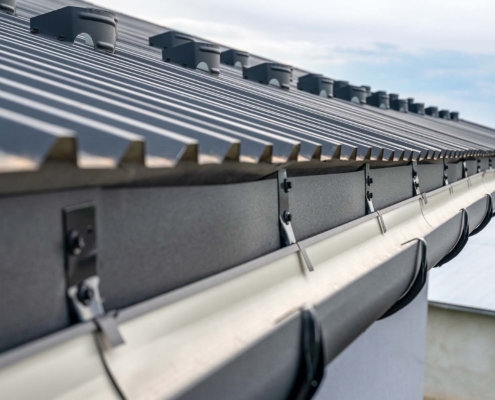

If your building’s drainage system isn’t ready, one heavy storm can lead to leaks, structural issues, and thousands of dollars in damage. This guide breaks down the best flat roof drainage solutions and offers a step-by-step plan to prepare your property before the rainy season hits.

Why Drainage Is Critical for Commercial Roof Health During Rainy Season

California and Washington share a unique weather challenge: long dry stretches interrupted by periods of intense rainfall. When storms hit, especially during the winter, roofs are put to the test. If your drainage system is clogged, damaged, or simply not designed to handle heavy downpours, the water stays on your roof, sometimes for days.

The Consequences of Poor Drainage

Flat roofs naturally hold water longer than pitched ones. Without the right system in place, water tends to pool and put stress on your building in several ways:

  • Ponding water adds weight and pressure that can cause low spots and eventually collapse sections of your roof deck.
  • Leaks begin small but spread quickly, especially near seams, vents, and flashing.
  • Structural damage can result from long-term saturation, weakening support materials like wood or insulation boards.
  • Costly repairs are the inevitable outcome when moisture is allowed to linger unchecked.

Ignoring drainage issues means gambling with your property, your assets, and your tenants’ safety. Planning ahead ensures your flat roof is a barrier, not a liability.

Understanding the Components of Commercial Roof Drainage Systems

A flat or low-slope commercial roof is only as good as the system that drains it. Most setups rely on a combination of tools to guide water off the surface and safely away from the building.

  • Gutters: These are horizontal channels installed along roof edges that catch rainwater and direct it toward downspouts. They’re especially common on roofs with even a slight slope and are easy to maintain with regular cleaning.
  • Downspouts: Connected to gutters or scuppers, downspouts run vertically along the side of your building and carry water to the ground level. They should be clear of obstructions and positioned to prevent erosion at the base.
  • Scuppers: Scuppers are openings at the edge of the roof that allow water to drain off the side, often into downspouts or through diverters. They’re a simple, cost-effective way to reduce pooling on buildings with parapet walls.
  • Interior Drains: These are placed at low points on the roof and route water through pipes located inside the building. They’re common in larger commercial spaces and provide a clean look with hidden drainage.

5 Steps to Prepare Your Roof for Rainy Seasons

Getting ahead of the storm doesn’t have to be complicated. Here’s a step-by-step commercial roof water damage prevention plan to help you prepare for the rainy season:

1. Schedule a Professional Inspection

The first step is always a thorough checkup. A trained roofing technician can spot issues the untrained eye might miss—like hairline cracks around drain bowls, deteriorated membrane seams, or signs of water damage inside the building. At ROOFCORP, our inspections go beyond surface-level assessments and include interior and exterior evaluations.

2. Clear Debris and Check for Blockages

Leaves, dirt, bird nests, and rooftop equipment all contribute to blocked drainage. Even one clogged scupper or interior drain can turn a storm into a serious problem. Clear every drain opening, flush the downspouts, and double-check gutters for anything that might slow down water flow.

3. Ensure Proper Water Flow and Slope

Over time, flat roofs can settle or shift, creating new low points where water collects. Your roof should be designed with subtle slopes that guide water toward drains. If you notice consistent ponding in the same spots, your slope may need to be re-graded or supplemented with tapered insulation.

4. Inspect for Wear, Rust, or Damage

Rainwater is relentless. It exploits weaknesses in materials and spreads them quickly. Check every component of your drainage system for wear—rusted downspouts, cracked sealant, loose brackets, or missing flashing. Interior drains, especially those around the bowls and strainers, need to be inspected for integrity.

5. Implement a Preventive Maintenance Plan

One inspection isn’t enough. Roofs need year-round attention, especially in states like California, where long, dry seasons may hide slow-developing issues. Create a routine maintenance plan that includes seasonal inspections, emergency response, and proactive repairs. The upfront investment pays off in reduced downtime and fewer surprises.

The Cost of Ignoring Drainage Issues: Real Risks for Commercial Properties

Flat roof drainage issues don’t go away on their own. They escalate. What starts as a few inches of ponding water can turn into a leaky ceiling, damaged HVAC systems, and mold remediation bills.

  • Water Intrusion and Interior Damage: Moisture doesn’t just affect the roof. Once it enters the building, it can soak insulation, damage walls, and ruin flooring. Offices, retail stores, and warehouses may also lose productivity due to temporary closures or repairs.
  • Mold and Health Concerns: Stagnant water leads to mold, mildew, and bacteria growth. That’s a building maintenance concern and a health risk, especially for employees or tenants with allergies or respiratory conditions.
  • Roof Membrane Damage: Roofing membranes are designed to repel water, not hold it. Prolonged exposure leads to blistering, bubbling, and cracking, opening the door to water intrusion that shortens the lifespan of the entire roof.
  • Legal and Insurance Issues: Leaks and building damage can lead to tenant complaints, legal claims, and insurance disputes. If negligence can be proven, such as skipping inspections or ignoring known drainage issues, you could be liable.
  • Long-Term Savings with Proactive Care: The flip side is encouraging: a properly maintained drainage system can save tens of thousands over the life of your roof. Timely repairs and smart upgrades don’t just prevent damage; they extend the functional life of the entire system.

The rain doesn’t wait until it’s convenient. Neither should you. ROOFCORP offers thorough, customized inspections and flat roof drainage solutions designed for commercial buildings across California and Washington. Check out more.

Our No-Charge Inspections

Best Materials for Long-Lasting Drainage Components

Choosing the right materials for your flat roof drainage solutions and system can make a major difference in durability, performance, and long-term maintenance costs. Professional-grade components installed by experienced roofing teams will withstand California’s seasonal extremes and reduce the risk of premature failure.

  • PVC and TPO membranes are durable and highly resistant to chemical and water damage around drain areas.
  • Cast iron is a reliable material for interior drain bowls and piping, offering strength and fire resistance.
  • Aluminum and galvanized steel are popular for gutters and downspouts due to their corrosion resistance and structural integrity.
  • Always have a licensed roofing contractor assess and install your drainage components for proper function and longevity.

Partner with ROOFCORP for Year-Round Drainage Protection

Flat roof drainage solutions are a critical part of your commercial building’s performance. Don’t let storms catch you off guard. ROOFCORP has decades of experience helping California and Washington business owners stay ahead of weather-related risks. Our inspections, maintenance programs, and repair services are tailored to your needs and your structure. Get in touch today and let’s make sure your roof drains are ready for anything.

Share This Post

  • Share on Facebook
  • Share on X
  • Share on WhatsApp
  • Share on Pinterest
  • Share on LinkedIn
  • Share on Tumblr
  • Share on Vk
  • Share on Reddit
  • Share by Mail

More Like This

Commercial roof drain system

The Ultimate Guide to Commercial Roofing Drains: Protecting Your Building from Water Damage

Commercial Roof Maintenance
https://www.roofcorp.com/wp-content/uploads/2025/07/Commercial-roof-drain-system.jpg 1250 2000 Abstrakt Marketing /wp-content/uploads/2024/05/roofcorp-logo.png Abstrakt Marketing2025-07-03 09:13:152026-04-02 09:42:45The Ultimate Guide to Commercial Roofing Drains: Protecting Your Building from Water Damage

Categories

  • Alaska
  • Commercial Roof Maintenance
  • Commercial Roofing
  • Drainage
  • Energy Efficient Roofing
  • Flat Roofs
  • Gas Station Roofing
  • Liquid-Applied Membranes
  • Modified Bitumen Roofing
  • National Roofing Accounts
  • Preventative Maintenance
  • Roof Coatings
  • Roof Repair / Replacement
  • Roofing Maintenance
  • Roofing Services
  • Roofing Systems
  • TPO Roofing

Contact Us

"*" indicates required fields

This field is for validation purposes and should be left unchanged.

“ROOFCORP™” is a registered trademark of Roofcorp of America, Inc., registered with the U.S. Patent and Trademark Office under registration number 2528633.

About Us

Founded in 1985, ROOFCORP has grown from a small family-owned business to a leading commercial roofing company on the West Coast.

roofcorp-logo

What We Do

Roof Services

Roof Systems

Stay Connected

  • Link to LinkedIn

Contact Us

California: 2130 S. Dupont Dr, Anaheim, CA, 92806 /1-800-439-9910

Oregon: P.O. Box 7128, Beaverton, OR, 97007 / 1-800-439-9910

Washington: P.O. Box 69315, Seattle, WA, 98168 / 1-800-439-9910

Website by Abstrakt Marketing Group ©
  • Privacy Policy
  • Sitemap
Scroll to top Scroll to top Scroll to top

This site uses cookies. By continuing to browse the site, you are agreeing to our use of cookies.

AcceptLearn more

Cookie and Privacy Settings


How we use cookies

We may request cookies to be set on your device. We use cookies to let us know when you visit our websites, how you interact with us, to enrich your user experience, and to customize your relationship with our website.

Click on the different category headings to find out more. You can also change some of your preferences. Note that blocking some types of cookies may impact your experience on our websites and the services we are able to offer.

Essential Website Cookies

These cookies are strictly necessary to provide you with services available through our website and to use some of its features.

Because these cookies are strictly necessary to deliver the website, refusing them will have impact how our site functions. You always can block or delete cookies by changing your browser settings and force blocking all cookies on this website. But this will always prompt you to accept/refuse cookies when revisiting our site.

We fully respect if you want to refuse cookies but to avoid asking you again and again kindly allow us to store a cookie for that. You are free to opt out any time or opt in for other cookies to get a better experience. If you refuse cookies we will remove all set cookies in our domain.

We provide you with a list of stored cookies on your computer in our domain so you can check what we stored. Due to security reasons we are not able to show or modify cookies from other domains. You can check these in your browser security settings.

Other external services

We also use different external services like Google Webfonts, Google Maps, and external Video providers. Since these providers may collect personal data like your IP address we allow you to block them here. Please be aware that this might heavily reduce the functionality and appearance of our site. Changes will take effect once you reload the page.

Google Webfont Settings:

Google Map Settings:

Google reCaptcha Settings:

Vimeo and Youtube video embeds:

Accept settingsHide notification only
  • Emergency Service